Tax inclusive or exclusive pricing
Sets whether new quotes and invoices treat typed prices as tax-inclusive or tax-exclusive when tax is enabled.
Use this setting to make price entry and customer display consistent with the business's tax configuration.
Before you start
Availability: Free plan and above. Enabled business features, role permissions, connected providers and supported devices may add requirements.
Documented roles: Owner, Office. A role name alone does not override the permissions set by your business.
Where to find it: Settings > Business Settings > Documents > Tax display.
Confirm the business tax setting and the intended inclusive or exclusive treatment before entering prices. Use the rate applicable to the actual transaction.
Step by step
- Open Business settings > Documents at /group-settings?tab=documents.
- Confirm the business tax setting is on in the business/accounting settings if the business is registered.
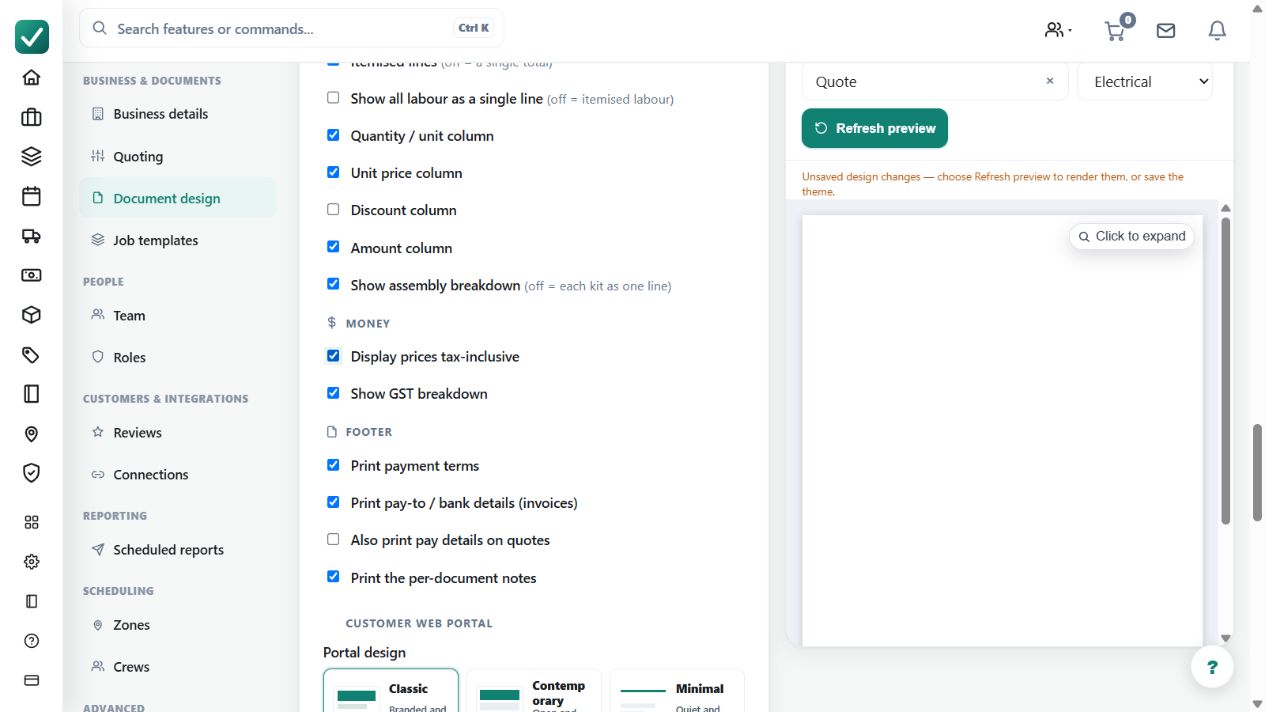
- Edit the active document theme and choose whether customer prices display tax-inclusive or tax-exclusive.
- Create a quote or invoice and check the totals area before sending so tax is shown the way the business expects.
Worked example
For an illustrative 10% tax example, a $100 exclusive amount produces $110 inclusive. Confirm how the selected theme interprets a typed price, then inspect the totals rather than adding tax a second time.
This is an illustrative scenario. Use your own approved scope, quantities, rates and business rules.
Check the result
Review line amounts, tax and the final total together on a new quote or invoice. Check a known calculation before applying the setup to customer documents.
Limits and troubleshooting
The example rate is illustrative, not tax advice. A display preference does not establish tax registration or determine the treatment of every item; the business must confirm those settings.
Check current plans and feature availability · Browse every guide